Therapists, give your clients more ways to open up.
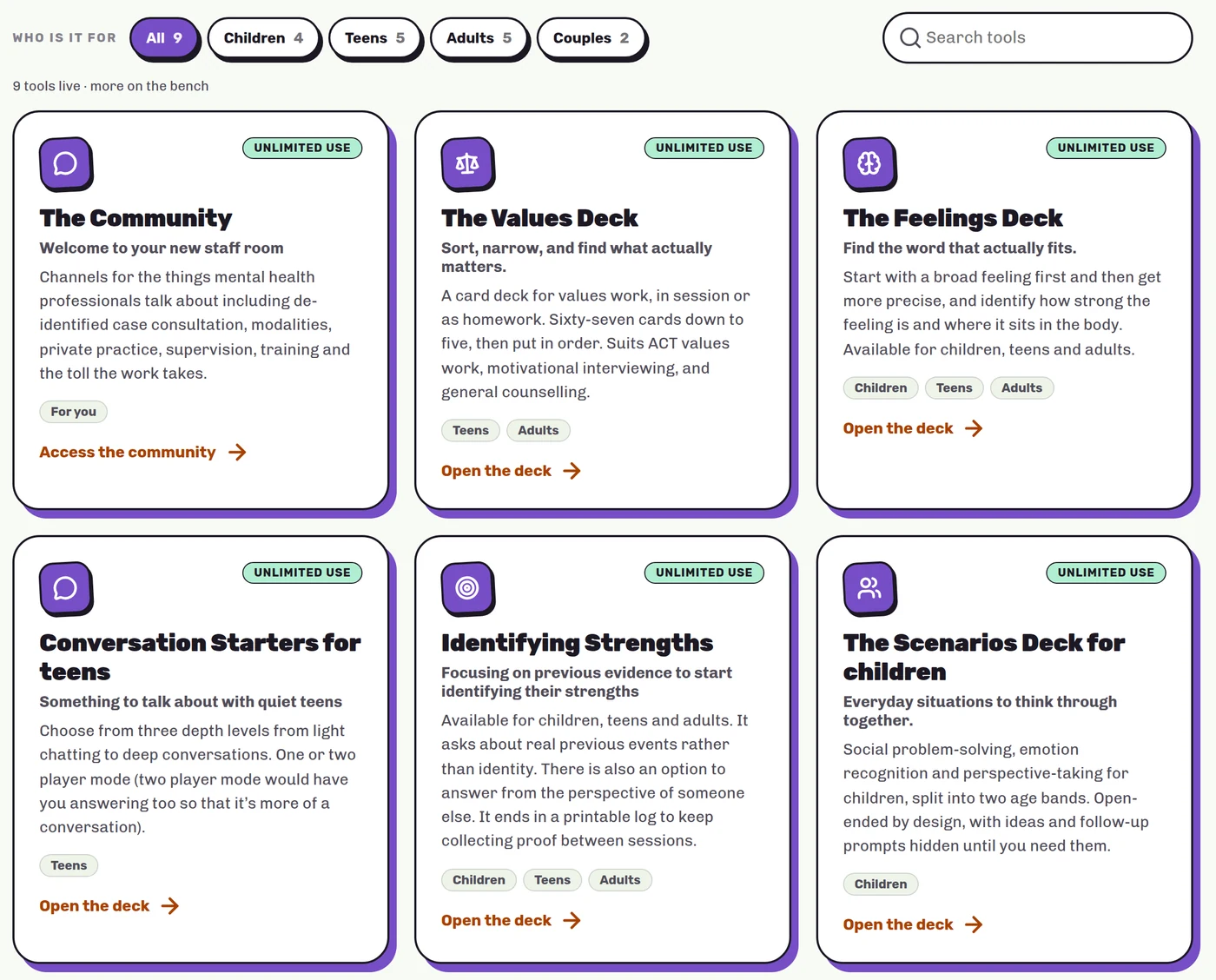
Help clients put feelings and experiences into words.
You might hear “fine,” “bad” or “I don’t know” from clients with very different needs.
A shared activity gives you another way into the conversation, at a pace you judge appropriate.
Their responses give you something specific to follow up on. You choose when an activity fits, what to ask next and where to give the conversation more time.
Finding the right activity shouldn’t take over your preparation time.
You may already have useful handouts, saved links and exercises you return to.
There’s still the work of finding something that fits this client, this age group and what you want to explore today.
Searching for a prompt you remember seeing somewhere.
Adapting a worksheet to the person you’re meeting.
Putting an activity together around an idea you already know how to work with clinically.
That preparation takes time alongside your appointments, notes and the rest of your practice.
Having a choice of activities ready gives you more room to focus on how you’ll use them with your client.
Your judgment leads. You have more ways to put it to work.
Give your client something concrete to respond to, and give yourself more to explore.
What if an activity could help you hear more about your client’s experience, while giving you less to prepare beforehand?
I’m Momo, the person behind Psych Fieldkit.
When I began building this fieldkit, I drew on the work I already knew, turning complex ideas into structured, usable experiences.
I kept coming back to what would actually be useful while a therapist and client were sitting in the same room together.
That means activities your client can take part in, choices and responses you can explore together, and a record you can return to afterwards.
You bring your understanding of the person. The materials give you more ways to work with what they share.
Keep your attention on the client, with ready-to-use materials.
Less material to prepare
Open a prepared activity when it suits the work, so you can spend your preparation time considering the client and your approach.
More to explore together
Your client has something to choose, compare or respond to. Their responses give you specific material to follow up on, in the direction you judge useful.
A record to return to
Keep a printable account of what you explored, so you and your client have something concrete to revisit between sessions or when you meet again.
Come to your sessions with more options already prepared.
Picture preparing for your week with a choice of activities already there when you need them.
Searching through saved links for an activity that suits tomorrow’s teen session.
Opening a conversation activity with lighter and deeper prompts ready, then choosing what fits this teen.
Putting together materials for an approach you already know how to use clinically.
Choosing a prepared activity for feelings, values, strengths or relationships, ready to bring into the conversation.
Creating a separate handout to capture what you explored in the session.
Saving the activity’s completed sheet, ready to revisit with your client.
Looking for another resource when a different client need comes up.
Returning to a growing collection, with new tools each month and the option to request an activity.
More of the practical material is ready, so you can focus on how to use it with the person in front of you.
Meet Psych Fieldkit
Your growing collection of ready-to-use activities for the work you already do with clients.
Open an activity when it fits the conversation, work through it together and follow what your client brings to it.
Your membership gives you
A choice of interactive decks and activities for exploring feelings, values, strengths, perspectives, relationships and more.
Unlimited activity use so you can return to the tools across clients and sessions.
Printable takeaways that give you and your client something concrete to revisit.
New tools every month so you keep getting fresh options for your practice.
A member community where you can discuss the work with other mental health professionals.
You also receive three monthly credits for the optional AI Case Formulation Toolkit as a free bonus.
Choose the suitable activity for your clients.
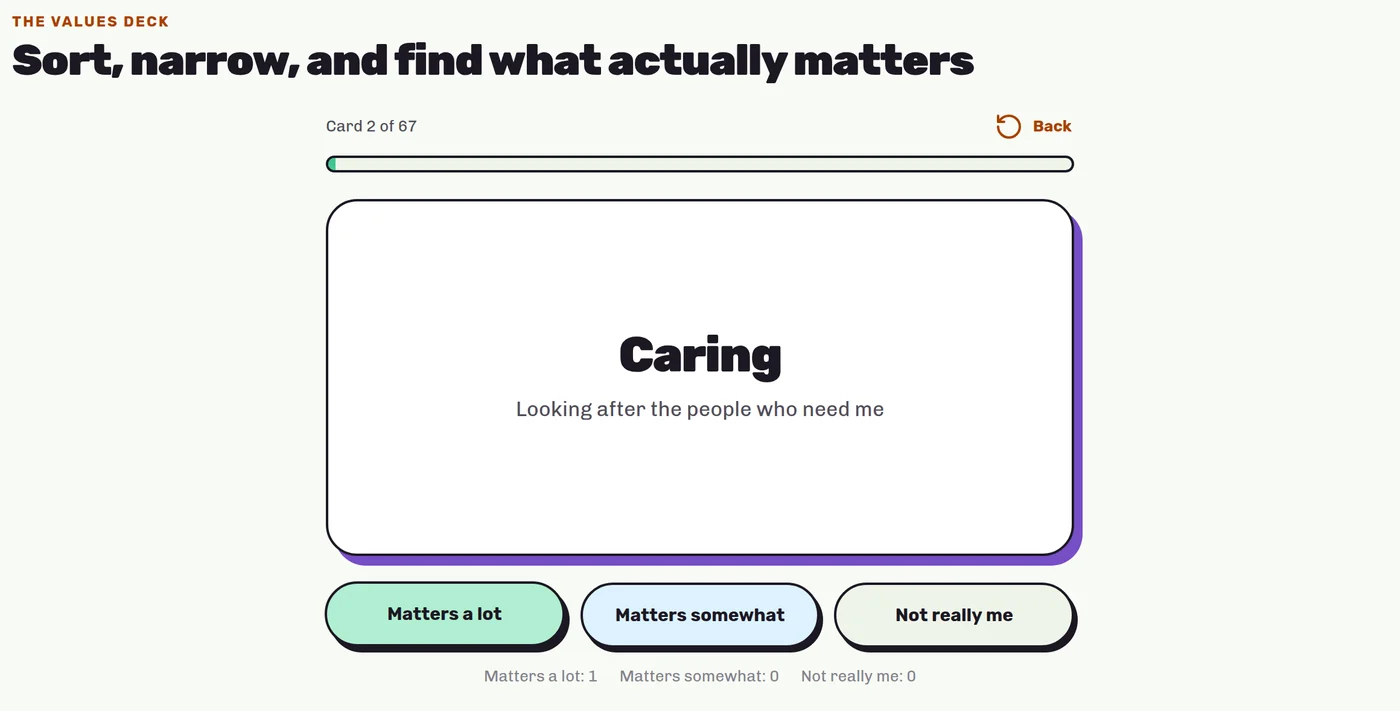
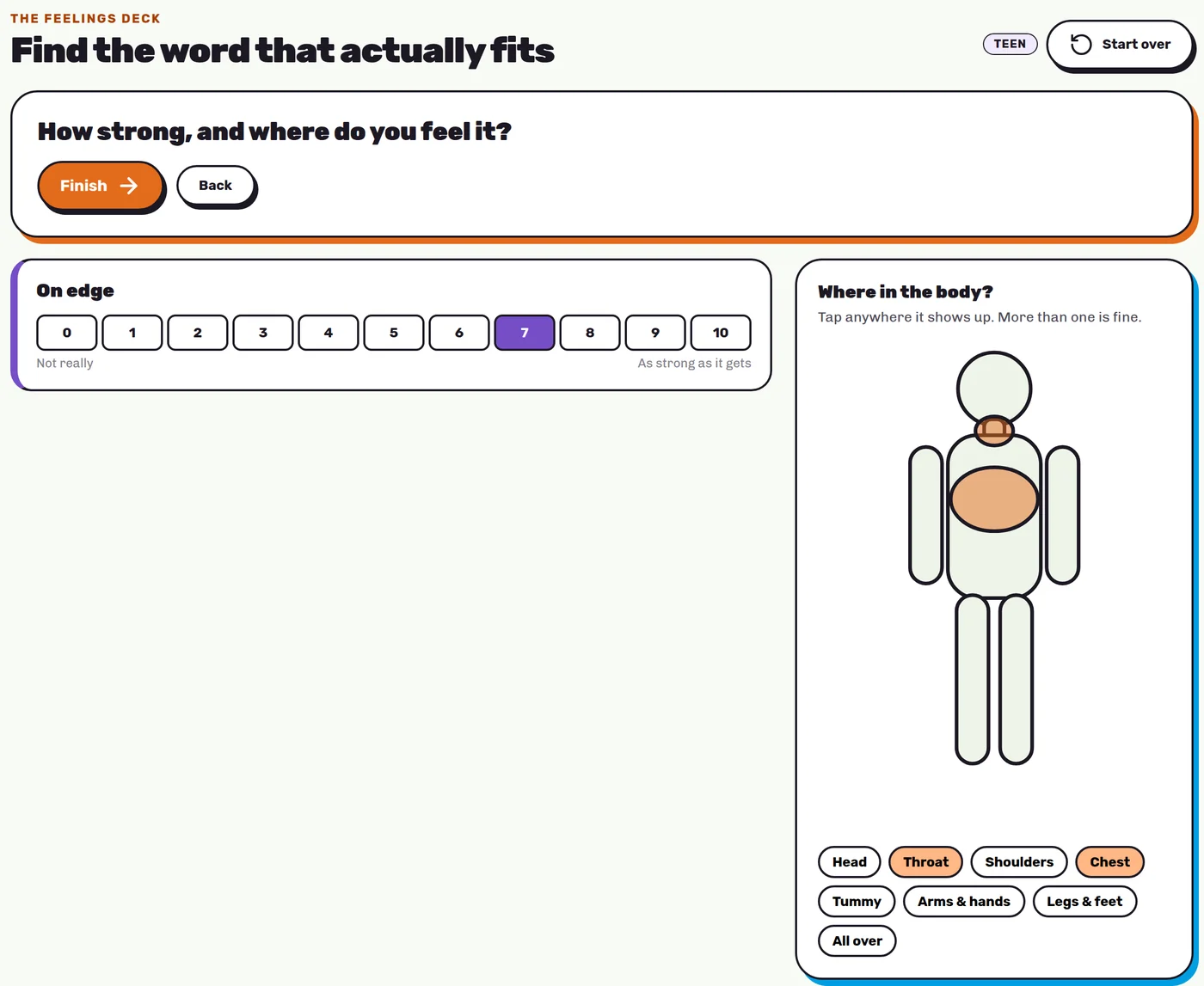
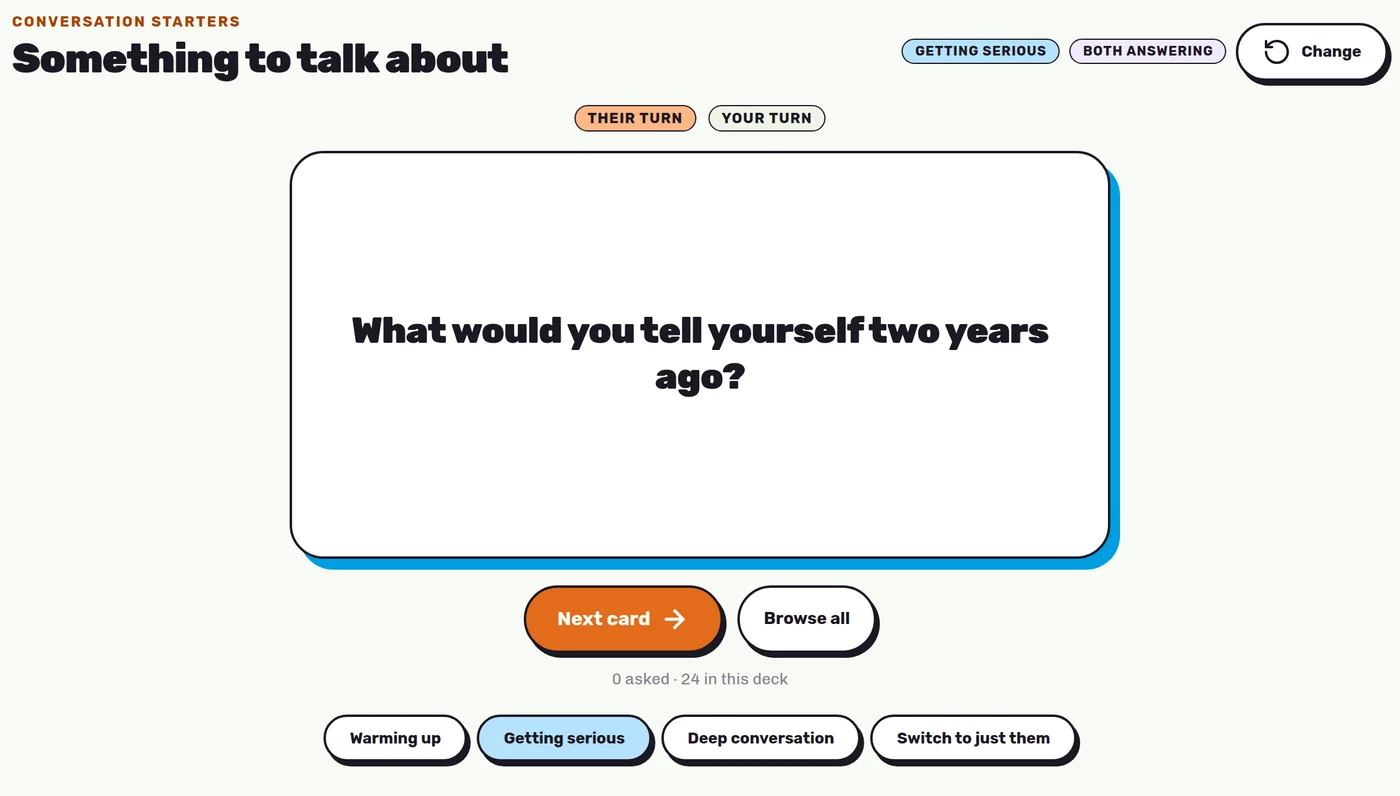
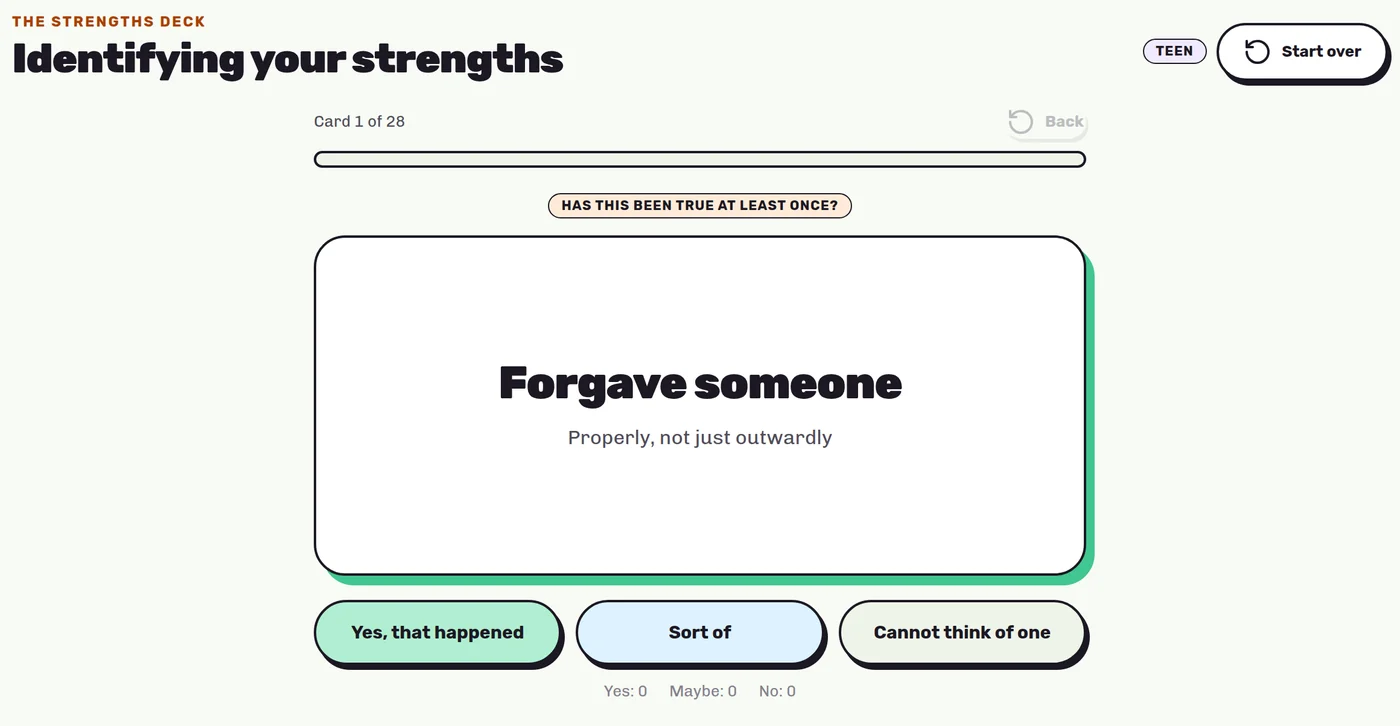
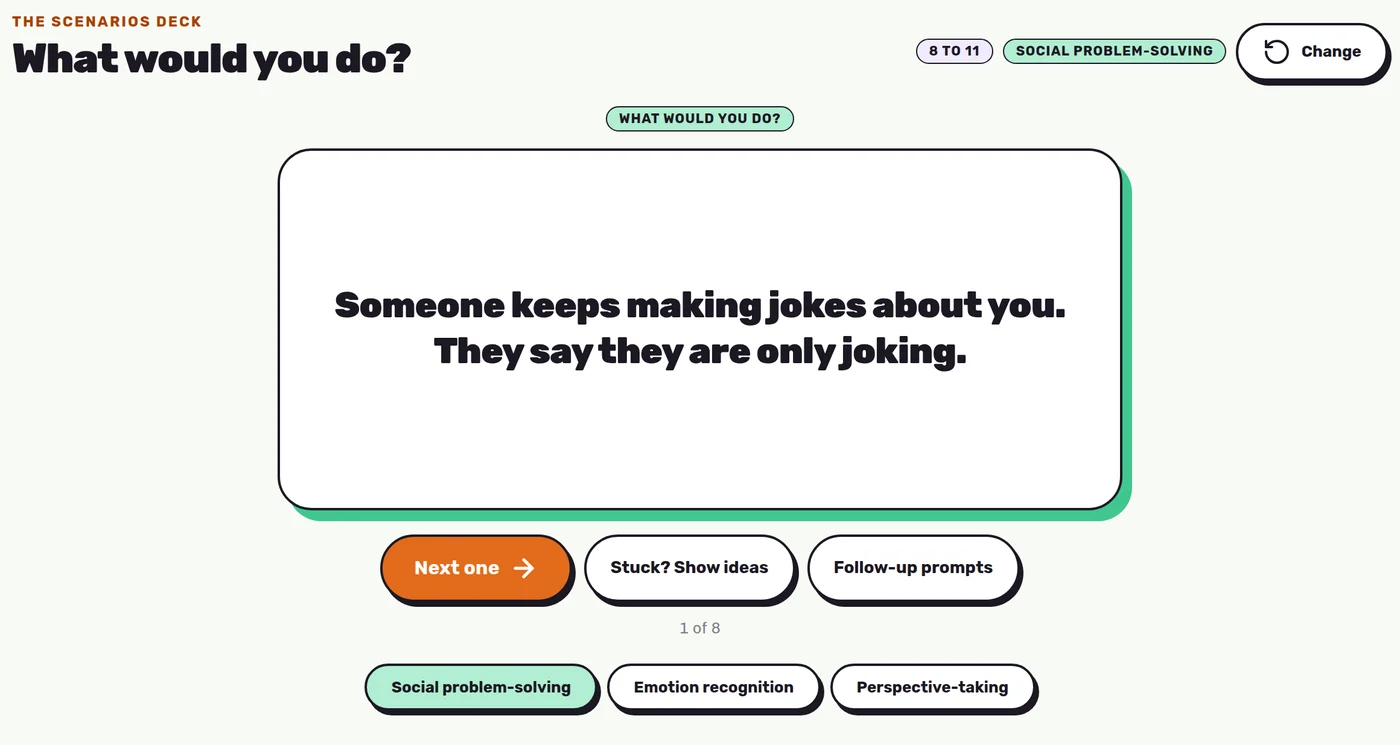
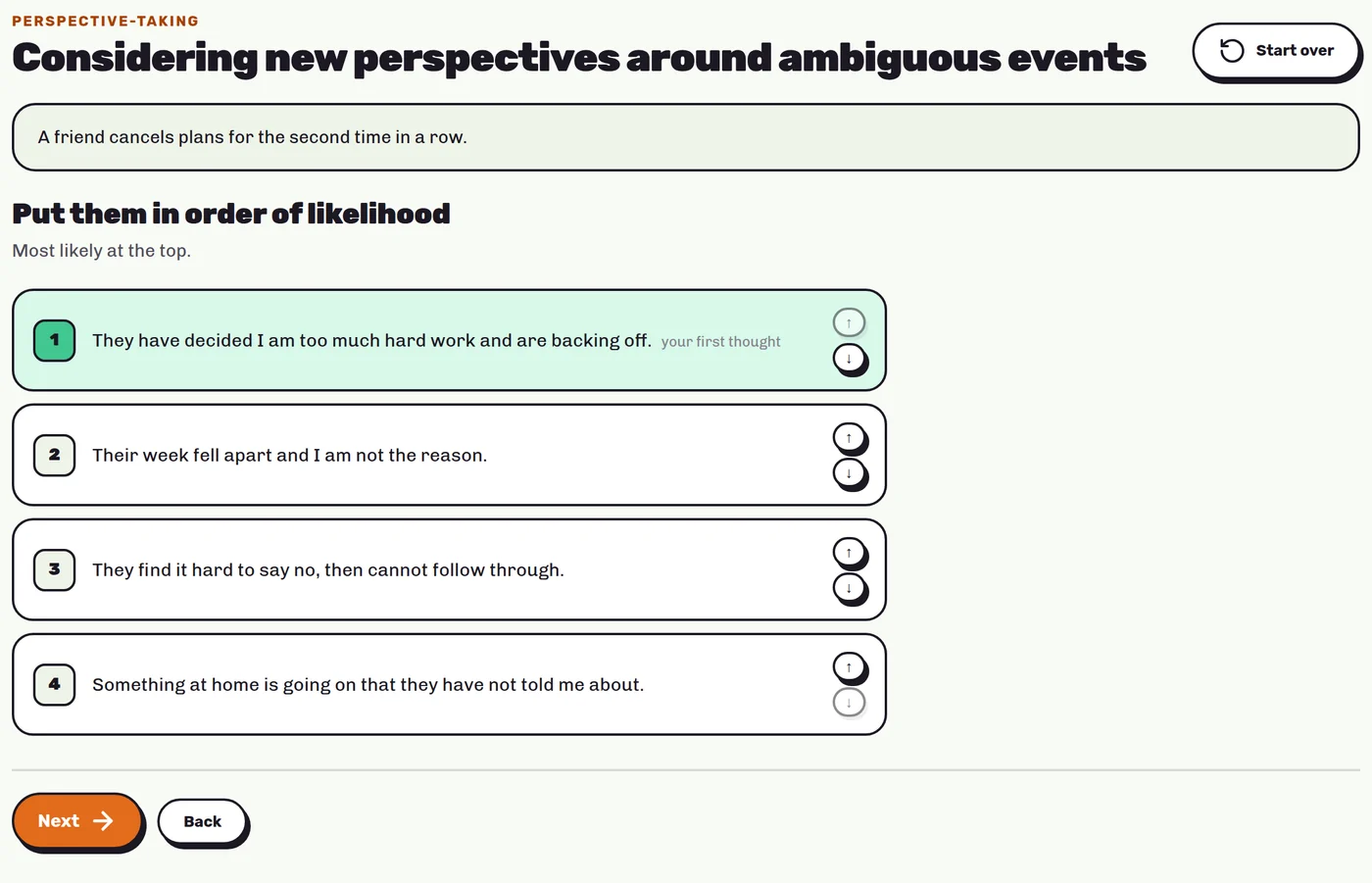
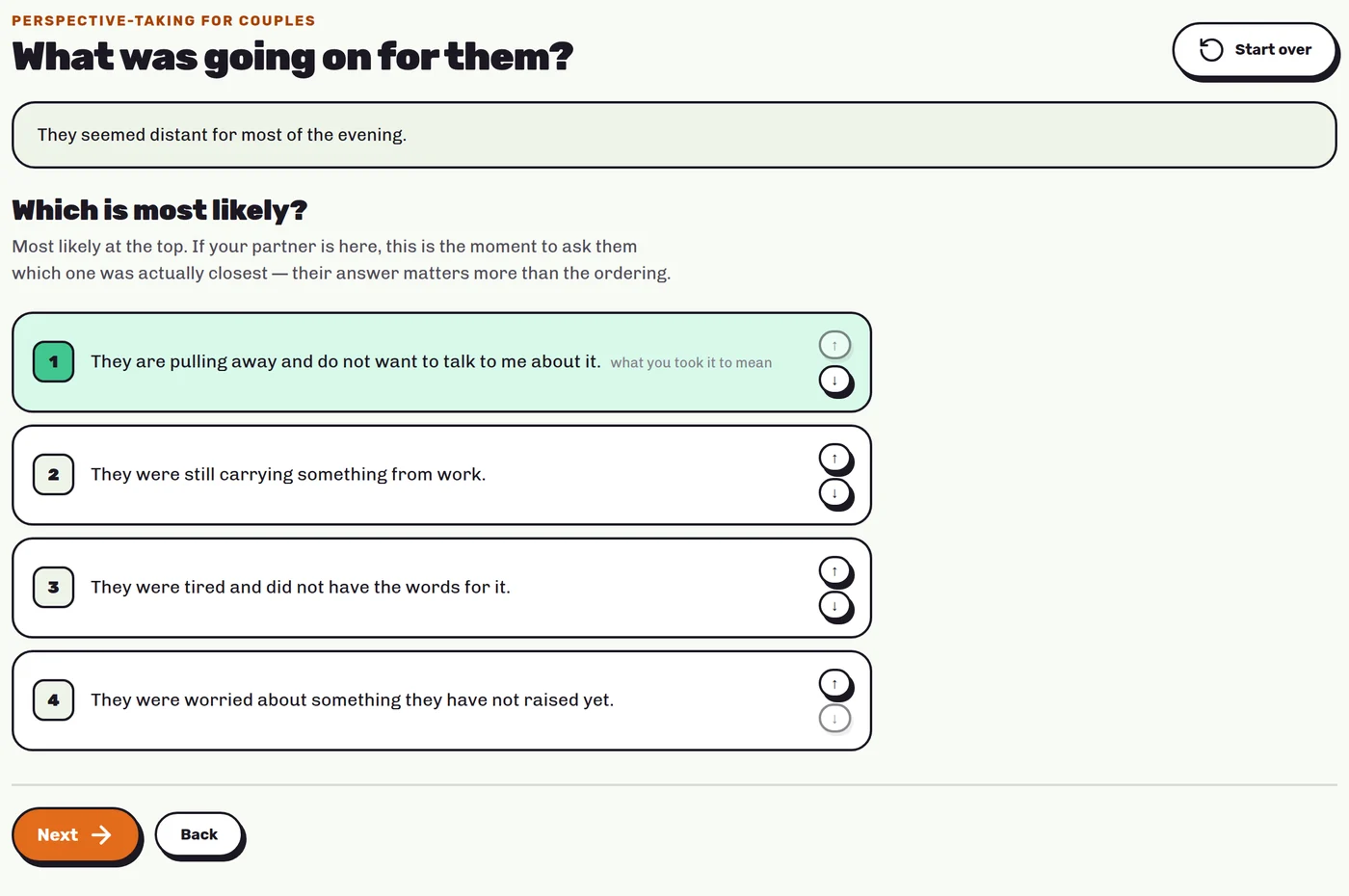
Bring useful activities into your work with children, teens, adults and couples.
With children, get a fuller picture of how they understand feelings, strengths and social situations.
With teens, make room for conversation, self-exploration and what matters to them.
With adults, bring emotions, priorities, strengths and different interpretations of an experience into the discussion.
With couples, work with both perspectives and the words each person wants the other to hear.
Use relevant activities alongside ACT, CBT, DBT, motivational interviewing, solution-focused work or Gottman-informed couples work, according to your judgment.
Choose what fits your client’s needs, your approach and the purpose of the session.
Give your clients a printable record to return to between sessions.
Finish an activity with a sheet that captures what you explored.
That might be
The values your client wants to keep in mind when making a decision.
A record of strengths grounded in experiences from their own life.
Words each partner could use in a conversation after the session.
Save the completed sheet as a PDF, print it for your client or share it through your usual secure communication method.
Next session, you have something concrete to revisit, discuss or develop further.
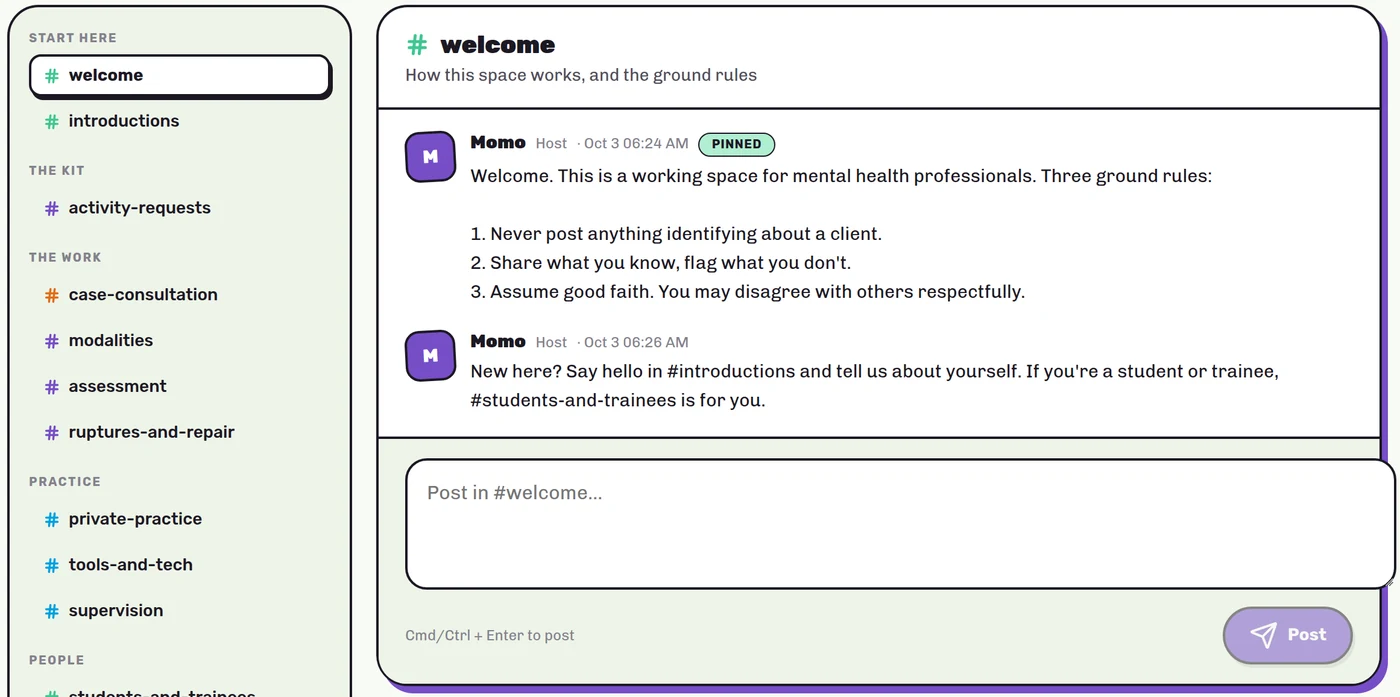
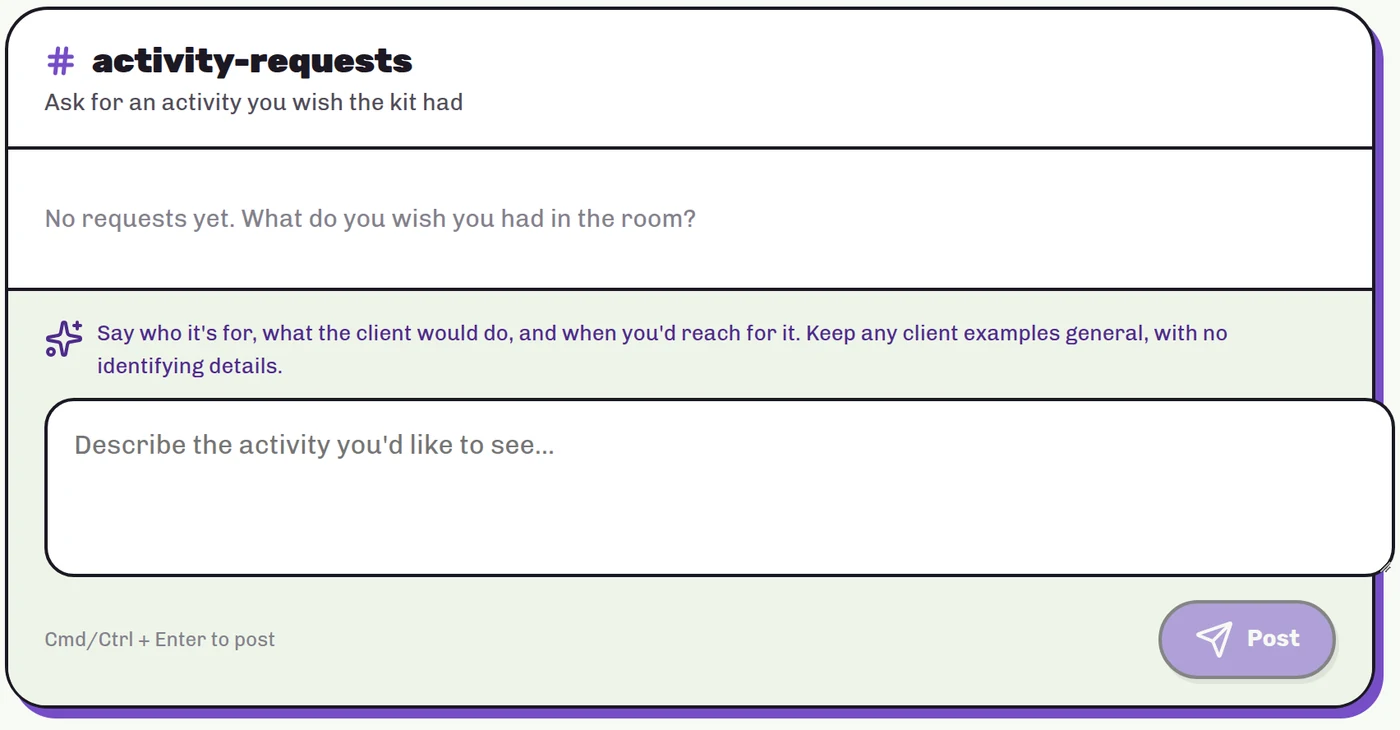
Request the activities you’d like to use with your clients.
You know the situations that come up in your practice.
Maybe there’s a theme you want to explore, an age group you’d like more options for, or an activity you keep wishing you had ready.
Tell us what you’d like added to Psych Fieldkit and how you’d use it. We’ll work towards making it happen as soon as possible.
Your requests help the fieldkit grow around the work you actually do, giving you a say in the tools you could use in future sessions.
Spend less time on the first draft of your case formulation.
Your free bonus includes three formulation credits each month.
You’ve heard the history, noticed recurring patterns and started considering how they connect.
Writing that thinking into a coherent formulation is another part of your work.
The AI Case Formulation Toolkit gives you a structured draft to consider alongside your own understanding of the case.
Describe a de-identified case as you would for consultation, then generate a formulation in your chosen modality.
Use the draft to
Review how the case information has been brought together.
Question possible connections against what you know about the client.
Refine your thinking before further planning or a conversation with a colleague.
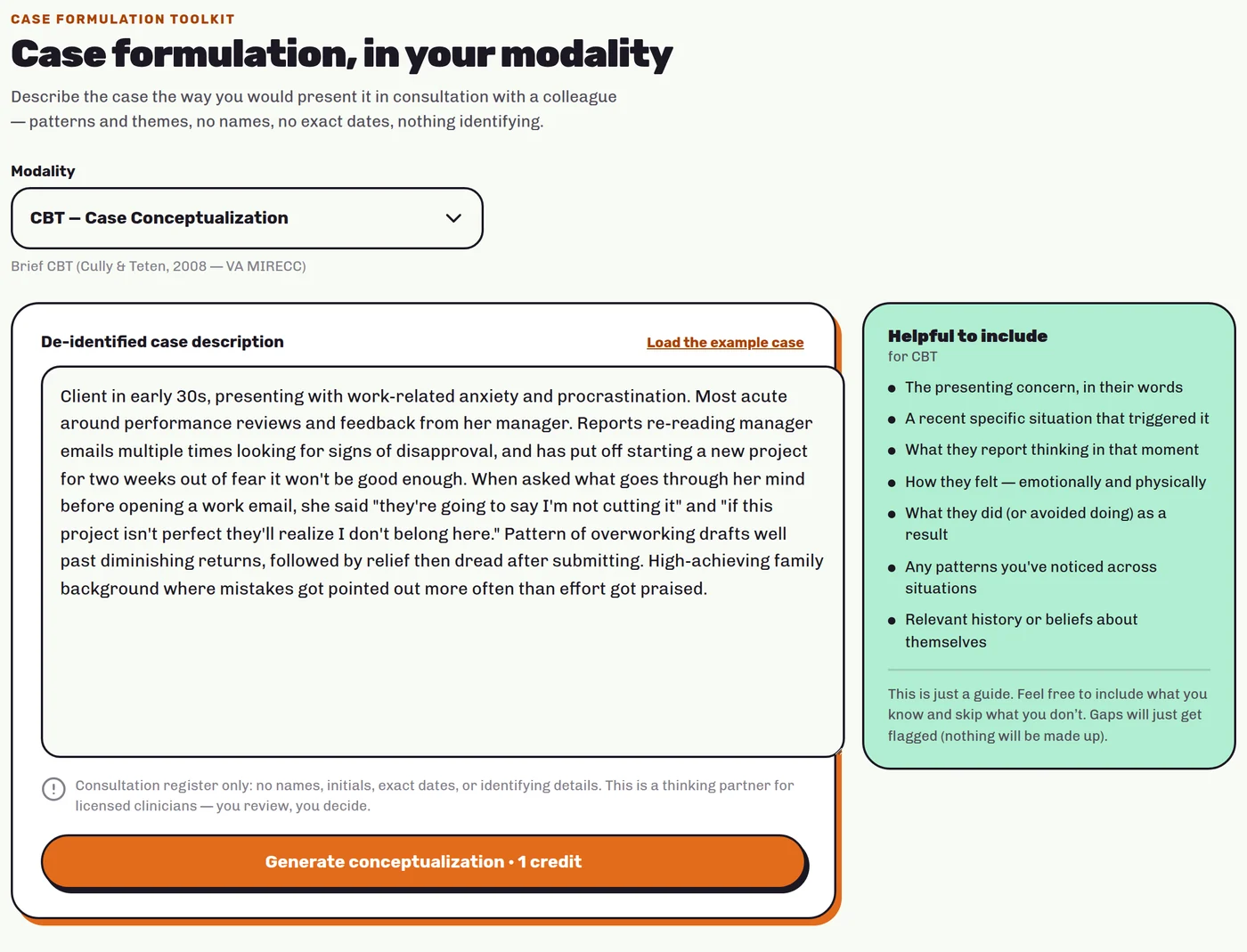
Available formulation options include CBT, DBT, ACT, psychodynamic, solution-focused, motivational interviewing, Gottman and EMDR.
Treat each formulation as a working draft to check and refine using your clinical judgment. You are able to edit the formulation directly before exporting as a PDF.
One formulation uses one credit. Extender packs are available if you want more credits before the month ends.
AI is used only in this optional formulation tool. You can use every in-session activity without it.
Enter de-identified clinical information only.
Psych Fieldkit is for licensed professionals. Whenever you enter clinical details
Use de-identified information only.
Never enter client names or other identifying details.
Information entered into the clinical tool fields is not saved on our server.
A business associate agreement (BAA) is in place.
Get the growing toolkit for $11 a month.
Use it across your caseload for one monthly price.
Use an activity in four sessions in a month, and your $11 membership works out to just under $3 per session.
Use an activity in eight sessions, and it works out to under $1.50 per session.
Activity use stays unlimited, so you can use the tools whenever they’re useful.
The value is in the appointments where a ready-to-use activity saves you a search, helps you explore something useful or gives your client a takeaway.
Your growing toolkit and free bonus for $11 a month.
Billed monthly. Cancel from your account at any time.
See the tools before you use them
Meet Momo
The person behind Psych Fieldkit
For most of my career, psychology was the thing I had wanted to pursue and hadn’t.
My grandfather was a psychologist. I had wanted to study psychology when I was younger too, but at the time, there simply wasn’t an opportunity for me to follow that path.
So my career went somewhere else.
I spent years working in marketing and learning design, thinking about how people understand complicated ideas and how you turn those ideas into experiences people can actually use.
Then, at 34, my wife and I had a baby.
And becoming a dad made it very difficult to keep treating the life I actually wanted as something I might get around to later.
I started asking myself a different question.
If I’m going to build the next part of my life, what do I actually want it to be built around?
For me, the answer kept coming back to psychology.
So I finally went back.
I’m now beginning my master’s degree in Psychology at the University of Leicester and working toward becoming a psychologist.
Psych Fieldkit grew at the intersection of those two parts of my life.
The field I had wanted to enter for years.
And the work I already knew how to do, turning complex ideas into structured, usable experiences.
It actually started as something very different.
The first version revolved around AI case formulation.
But as I built it, I became much more interested in a different question.
What could I build that would actually be useful while a therapist/clinician and client are sitting in the same room together?
That changed the product.
Case formulation stayed.
But it stopped being the centre of Psych Fieldkit.
The centre became the activities.
Because I don’t think the most useful application of technology in therapy is putting more technology between two people.
Sometimes it is simply giving those two people a better way to work with what is already happening between them.
That is what I want Psych Fieldkit to become.
A genuinely useful field kit for the work.
Momo
Founder, Psych Fieldkit
Seven-day fit guarantee
Try Psych Fieldkit for seven days.
If it isn’t a good fit for your practice, contact us within seven days of your first payment and we’ll refund that payment in full.
Use the activities in a way that fits your practice.
“Isn’t this basically a collection of worksheets?”
You’re getting interactive decks and activities to work through with your client. The printable captures what came out of that work.
Your client’s choices and responses give you material to explore in the session. Their completed sheet gives you something to revisit afterwards.
“I don’t want AI involved in my sessions.”
You can use every in-session activity without AI.
The AI Case Formulation Toolkit is an optional free bonus for your work between sessions. You decide whether to use it.
“I already know how to do these things clinically.”
Use the toolkit to put the approaches you already know into practice, with materials ready to hand.
You choose the activity, ask the follow-up questions and decide where the work goes. Your judgment leads throughout.
“Why pay monthly when free resources exist?”
Free resources may already be a useful part of your practice.
With Psych Fieldkit, you get a ready-to-use collection, unlimited activity use, printable takeaways and a member community in one place.
New tools are added every month, giving you fresh options as your caseload and needs change.
And if you’d like a specific activity added, you can request it to be added, and we’ll work towards making that happen as soon as possible.
Is Psych Fieldkit for you?
It’s built for licensed mental health professionals who want a wider practical toolkit for their sessions.
You’ll find it especially relevant if you
Find yourself searching through saved resources for an activity that fits a particular client.
Like activities that help clients actively explore something with you.
Work across different client needs or age groups.
Want tools you can open with minimal preparation.
Value giving clients something tangible to take away.
Want more options while keeping your own approach and clinical judgment at the centre.
Questions you might have
What do I get for $11 a month?
Unlimited use of all included decks and activities, printable outputs, the member community and new tools every month.
You also get three monthly credits for the optional AI Case Formulation Toolkit as a free bonus.
Does Psych Fieldkit use AI?
Only the Case Formulation Toolkit uses AI. All the in-session activities work without it.
What happens if I use all three formulation credits?
You can buy an extender pack while your subscription is active, or use your next monthly allocation when it becomes available.
Your activity use stays unlimited.
How much preparation do the activities need?
The activities are ready to open and use. You can preview the tools, choose what suits your client and decide how to bring an activity into the session.
How long do I have access?
Your membership is billed monthly. While your subscription is active, you can use the included activities as often as you like.
Will the activities fit the way I work?
You can choose activities for children, teens, adults and couples, and use them alongside the approaches you already practise.
For example, you might use the Values Deck alongside ACT or motivational interviewing, or choose a perspective-taking activity for work with an adult or couple.
You decide what fits the client, the purpose of the session and your clinical judgment.
Can I add my own material?
You can add your own cards to the Values Deck and Feelings Deck, so you can include language or ideas that are relevant to your clients.
Can I request a specific activity?
Yes. Tell us what you’d like added to the fieldkit and how you’d use it in your practice. We’ll work towards making it happen as soon as possible. There is a dedicated space in Psych Fieldkit for you to request new activities.
Are the children’s activities scored?
The children’s scenarios are open-ended. There are no points, scores, progress bars or right-answer labels.
Can I enter a client’s name or identifying details?
No. Use de-identified information only. Never enter client names or other identifying details.
Information entered into the clinical tool fields is not saved on our server.
Can I print what we do in a session?
Yes. Each clinical tool produces a sheet you can save as a PDF and print, giving you and your client a record to return to.
Can I cancel?
Yes. You can manage or cancel your membership from your account at any time.
What happens once I check out?
You’ll get immediate access to Psych Fieldkit, so you can start exploring the tools straight away.
How can I ask a question that is not answered here?
DM me directly on Instagram @psychwithmomo
Who operates Psych Fieldkit?
Psych Fieldkit is a Canadian corporation.
More ways to understand your clients, with less to prepare.
Give a teen a shared activity to respond to.
Explore a client’s feelings and priorities with something concrete in front of you.
Help an adult or couple consider a situation from another angle.
Leave your client with a record of what you explored together.
Have those activities ready when they fit the work, with new tools to try each month.
I’d love for Psych Fieldkit to become a useful part of the care and thought you bring to your sessions.
Momo